2-Day Mount Toubkal Trek from Marrakech
The quick summit trek for hikers short on time: up to the refuge on day one, on top of North Africa at sunrise on day two.
- Sunrise on the summit, 4,167 m
- Night at the Toubkal refuge
- Sidi Chamharouch shrine
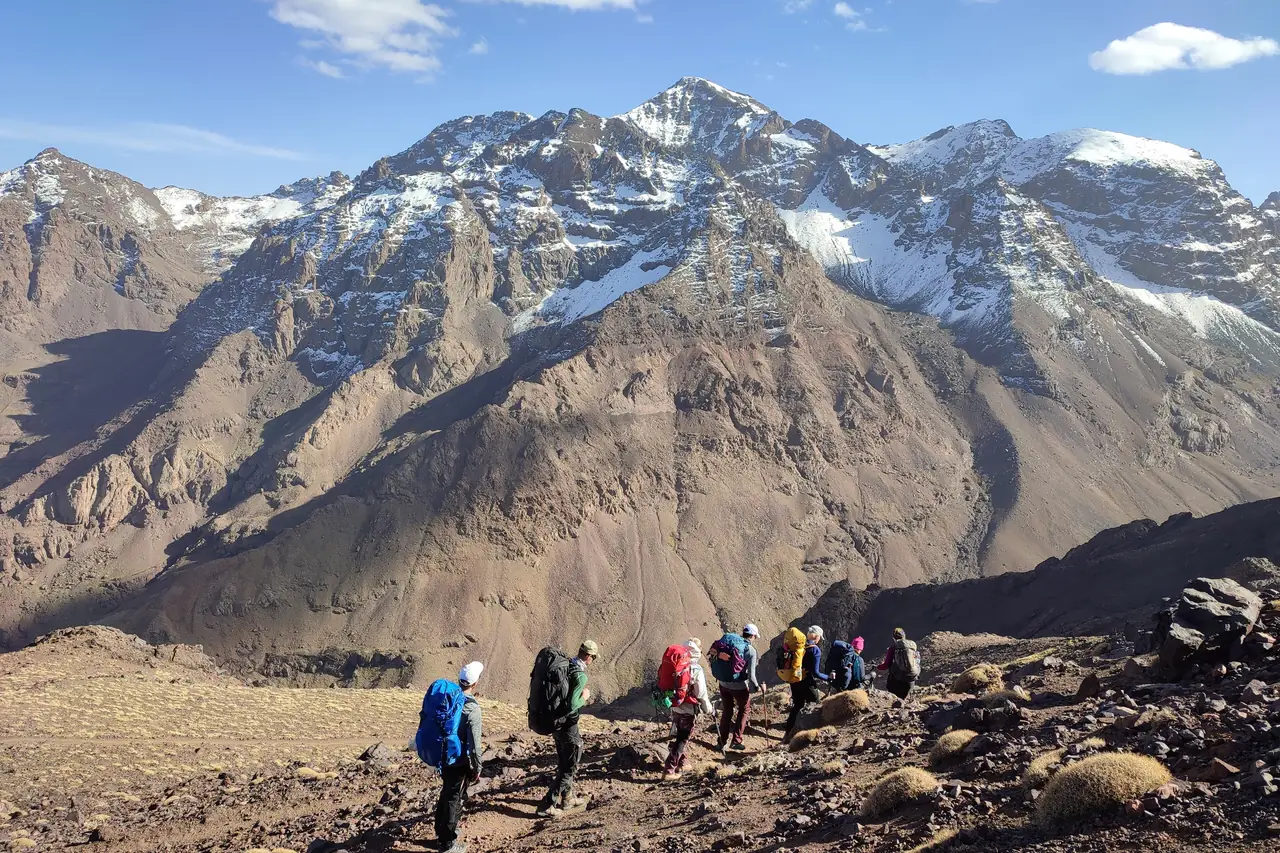
Guided treks to the 4,167 m summit of Jbel Toubkal and the Berber villages of the High Atlas. From a day out of Marrakesh to ten-day journeys, in small groups, with licensed guides who grew up in the valleys below the peak.
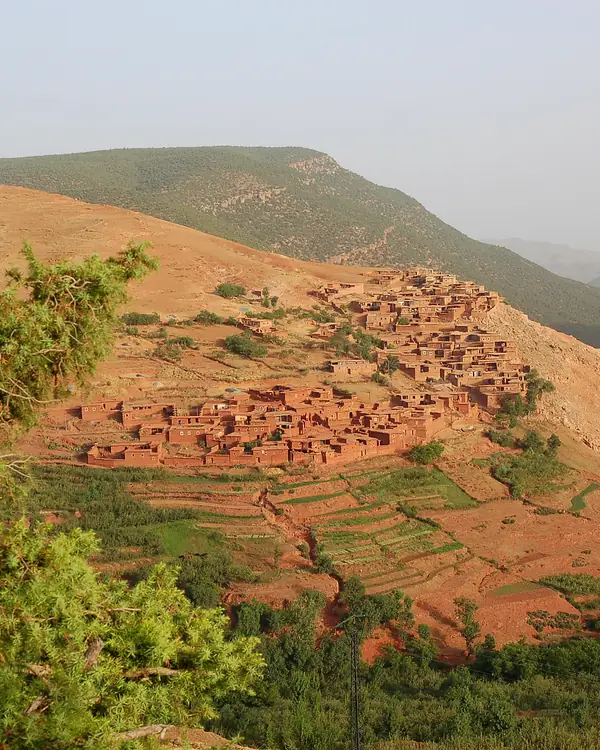
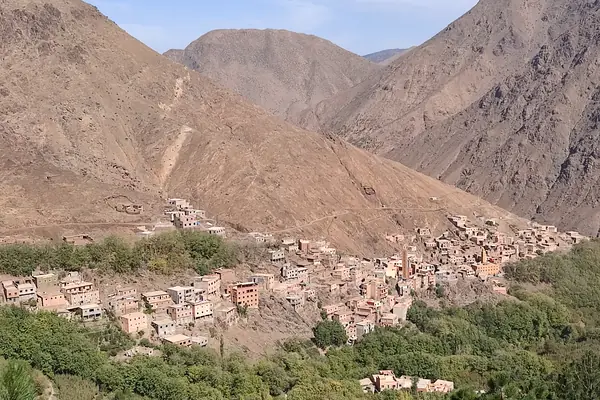
1,960 m Aroumd, first village on the trail
Every trek starts in Imlil, 1.5 hours from Marrakesh. Pick a quick summit push, a longer route through Berber villages, or a gentler walk below the peaks. Prices are per person.
The quick summit trek for hikers short on time: up to the refuge on day one, on top of North Africa at sunrise on day two.
Toubkal at a gentler pace: a day over the passes and through Berber villages first, so you reach the summit well acclimatised.
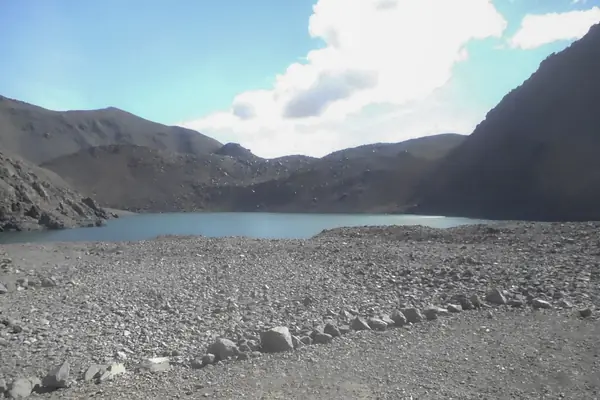
The Toubkal circuit: high passes, remote villages and the lake of Ifni, ending with the summit once you are fully acclimatised.
The complete experience: the full Toubkal circuit plus a first day in the Imlil valley to settle in.
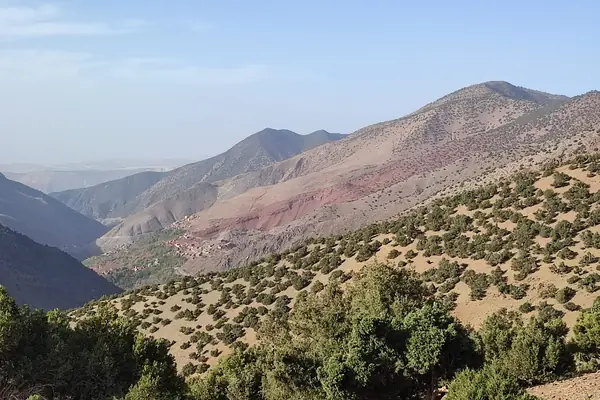
A quieter, more varied way to the summit: over the Tizi n'Mzik pass into the green Azzaden Valley before climbing Toubkal.
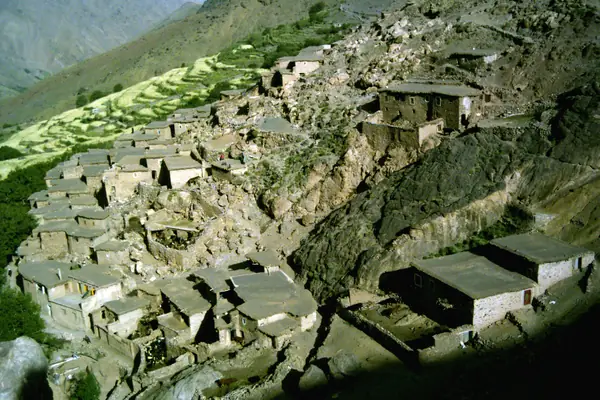
Three valleys, two passes and nights in village homes: the High Atlas at a human pace, with no summit pressure.
From Imlil to the Ourika valley over a 3,000 m pass, with pickup and drop-off in Marrakesh.
A deeper trek away from the crowds: the Azzaden Valley, the Imnane valley and a high crossing into Ourika.
An easy day in the mountains: a walk through Imlil's walnut groves and lunch in a Berber family home, back in Marrakesh by evening.
Climb Toubkal, cross the High Atlas to Aït Benhaddou, sleep among the Sahara dunes of Merzouga and return through the Dadès and Todra gorges.
2,100 m the Mizane valley
Sort by:
| 2-Day Mount Toubkal Trek from Marrakech | 2 | Challenging | 4,167 m | Yes | €170 |
|---|---|---|---|---|---|
| 4-Day Mount Toubkal Trek | 4 | Moderate to challenging | 4,167 m | Yes | €250 |
| 6-Day Mount Toubkal Trek | 6 | Challenging | 4,167 m | Yes | €350 |
| 7-Day Mount Toubkal Trek from Marrakech | 7 | Challenging | 4,167 m | Yes | €450 |
| Mount Toubkal via Azzaden Valley | 3 | Challenging | 4,167 m | Yes | €195 |
| 3-Day Berber Villages & 3 Valleys Trek | 3 | Moderate | 2,489 m | No | €195 |
| 3-Day High Atlas Mountains Hiking Tour from Marrakech | 3 | Moderate | 3,172 m | No | €195 |
| 6-Day Hike in the Atlas Mountains | 6 | Moderate to challenging | 3,172 m | No | €350 |
| Imlil Village Day Trip from Marrakesh | 1 | Easy | 1,960 m | No | On request |
| 10-Day Morocco Tour: Toubkal, Kasbahs and Sahara | 10 | Moderate | 4,167 m | Yes | On request |
No trek matches these filters. Try fewer filters, or ask us for a custom trip.
Answer four quick questions and we'll suggest the trek that fits your time, fitness and plans. You can always ask us on WhatsApp too.
2,310 m Sidi Chamharouch shrine
The 2‑day trek climbs 2,427 metres from Imlil to the top of North Africa. Here is how it unfolds, hour by hour. Every other trek has its own day‑by‑day page.
About 5–6 hours walking, +1,470 m
Pickup from your riad in Marrakesh. The road climbs south through Asni into the High Atlas.
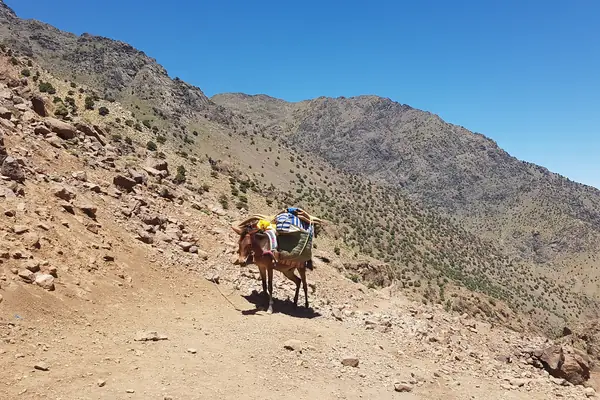
Imlil, 1,740 m. Meet your guide and muleteer. The mules take the bags; you take the path through walnut and apple orchards.
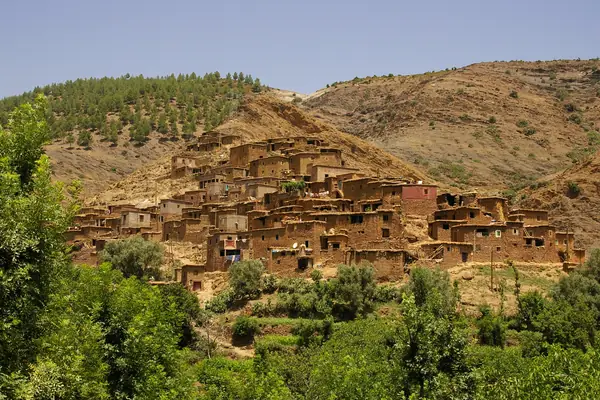
Through the red-earth village of Aroumd and across the wide riverbed of the Mizane valley.
Sidi Chamharouch, 2,310 m. Lunch beside the white shrine boulder, then a steady climb above the tree line.
Refuge, ~3,207 m. Hot tea, dinner and an early night under a sky full of stars.
About 8–10 hours walking, +960 m / −2,427 m
Wake-up, breakfast and headtorches on. The climb starts in the dark.
Slow, steady switchbacks up the scree of the south cirque to Tizi n'Toubkal, the col at about 3,940 m.
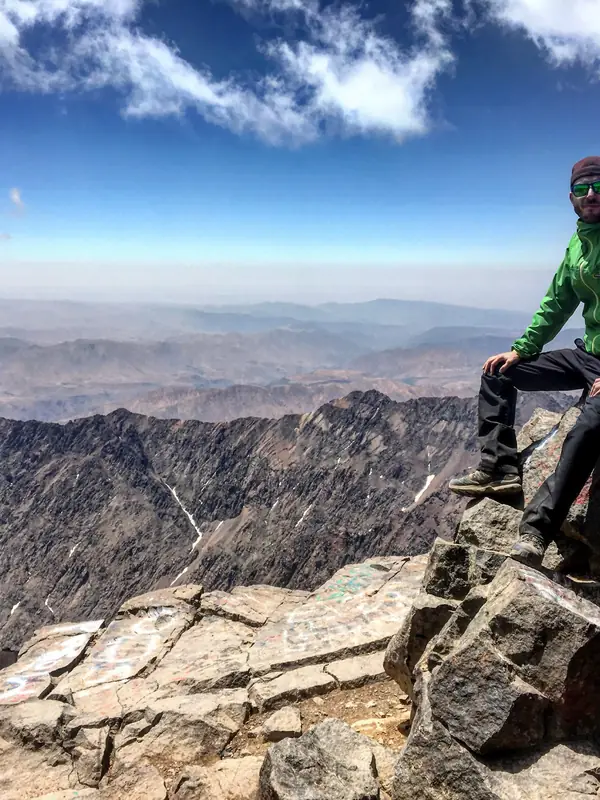
Summit, 4,167 m. Sunrise over the whole High Atlas. On clear days you can see the plains toward Marrakesh and the Anti-Atlas.
Back at the refuge for a second breakfast, then the long walk down past Sidi Chamharouch.
Imlil, then the drive back to Marrakesh. Dinner in the medina tastes very good tonight.
2,600 m above the tree line
Every trek is led by an officially licensed Imlil trekking guide, as Moroccan law requires on Toubkal, trained in first aid and mountain rescue.
Our guides are Amazigh (Berber) and grew up around Imlil. They know every path, every family and every change in the weather.
Small groups or fully private treks, so the pace is set by you and the guide knows how everyone is doing.
We watch for altitude symptoms, check the weather every morning and will turn around when the mountain says no. Coming home is the goal.
We work with local muleteers, cooks and village families, and we carry our rubbish down. Your trek supports the valleys you walk through.
Daily departures, private options and itineraries we adjust for your fitness, the season and the time you have.
3,207 m Toubkal refuge
3,450 m first light on the scree
October 2026
A very good experience. A superb, very well organised outing with our guide Youssef! Very good communication with Mohamed! Toubkal in one day! Mission accomplished! I recommend it
Translated from French
October 2026
We climbed Toubkal after completing the 10‑day grand tour of Toubkal. Nothing to fault in the organisation, from the pickup in Marrakesh to the return. Everything was perfect and just as we hoped. A special mention for the excellent cooking
Translated from French
September 2026
A superb experience for a first 4,000 m peak, full of traditions and landscapes. Our guide Yassine was great and looked after us all the way up! I recommend it!
Translated from French
August 2026
My father and I have just come back from an extraordinary trekking experience in the Atlas Mountains, including the ascent of Mount Toubkal. I can’t recommend Saeed Rashid and the whole Toubkal Hiking Experts team highly enough… Read the full review on Google
Translated from French
April 2026
Climbing Toubkal with Hassan as my guide was a wonderful experience. He is incredibly strong and experienced, and always made me feel confident, even on the most demanding sections… Read the full review on Google
Translated from French
April 2026
My four-day trek in the Atlas Mountains was unforgettable thanks to Yassin! Very friendly, he introduced me to Berber culture, its villages and its people, and showed me breathtaking landscapes, all while looking after my wellbeing and my meals. I couldn’t have done it without him! A big thank you!
Translated from French
2025
A big thank you to Said for our day in Toubkal National Park. We wanted to climb Toubkal from Imlil and back in a single day. Challenge accomplished thanks to Said, who organised our departure and all the equipment we needed very quickly. Thank you for a unique experience!
Translated from French
2025
Thank you for a wonderful adventure. Aziz was a brilliant guide, and so were the muleteers, and the food was very good. Thanks again to everyone for the organisation
Translated from French
3,700 m switchbacks above the refuge
Spring and autumn give stable weather and mild days. In winter Toubkal becomes a snow climb. It is beautiful, colder and only for fit hikers ready for an early start.
Live forecast
Loading the live forecast…
Forecast data from MET Norway / yr.no, CC BY 4.0. Summit figures are model estimates for 4,167 m. Mountain weather changes fast, so your guide makes the final call.
You don't need climbing experience. You do need to walk 6 to 10 hours a day on steep, rocky paths, with the summit morning starting before dawn. If you can hike a full day in hills at home, you can do this.
Train for 4 to 6 weeks before: long walks with a day pack, stairs, and a few runs or bike rides a week.
Tick items as you pack. Your list stays saved in this browser.
3,820 m the scree below the col
Everything first-time trekkers ask us before booking, in one place.
Jbel Toubkal rises to 4,167 metres in the High Atlas of Morocco, about 65 kilometres south of Marrakesh. It is the highest mountain in North Africa and the Arab world, and the centrepiece of Toubkal National Park, created in 1942. Every ascent starts in Imlil, a village at 1,740 metres at the end of the road from Marrakesh, from where mule paths lead up the Mizane valley to the refuges at the foot of the mountain.
The shortest guided trek takes two days: one day to walk from Imlil to the refuge at about 3,207 metres, and a second day to climb to the summit at sunrise and walk all the way back down. Most people enjoy the climb more with three or four days, which give the body time to adjust to the altitude. Longer treks of six or seven days circle the whole massif, crossing high passes and visiting remote villages before the summit.
From April to November the normal route is a walk, not a climb: there is no rope work or scrambling, but the days are long, the paths are rocky and the air is thin above 3,500 metres. If you are used to full days of hiking at home, you can reach the summit. In winter, from December to March, snow and ice turn Toubkal into a mountaineering ascent with crampons and an ice axe, so experience and fitness matter more.
Yes. Since 2019 the Moroccan authorities have required trekkers in the Toubkal area to be accompanied by an officially licensed mountain guide. A good guide does far more than show the way: they set the pace, watch for altitude sickness, read the weather, arrange mules, food and beds, and introduce you to the people who live in the valleys.
Spring, from April to June, and autumn, from September to October, bring the most reliable conditions, with mild days, cold nights and little snow on the route. July and August are hot in Marrakesh and the valleys but usually clear and pleasant on the mountain, with the occasional afternoon storm. Winter is quieter and spectacular, but colder and more serious.
Our treks start from €170 per person for the 2‑day climb from Marrakesh, and from €250 to €450 for longer routes. Prices include the licensed guide, mules and muleteer, meals on the trail and accommodation in the mountains; transfers from Marrakesh are included on treks that start there. Budget extra for travel insurance, tips for the team and drinks or snacks on the way.
Above about 3,000 metres many people notice headaches, breathlessness or poor sleep. These symptoms are usually mild and pass as the body adapts. Walking slowly, drinking 3 to 4 litres of water a day and spending more nights at altitude all help, which is why longer treks feel easier. Severe headache, vomiting, dizziness or confusion are signs to descend, and your guide will make that call with you.
Broken-in hiking boots, warm layers including a down jacket, a waterproof shell, a hat and gloves, a head torch, sun protection, two water bottles and a sleeping bag liner for the refuge. Mules carry your main bag, so you only walk with a day pack. In winter we supply crampons and ice axes. Our packing checklist covers the details.
3,940 m Tizi n'Toubkal, the last col
Can't find yours? Ask us on WhatsApp. We usually reply within a few hours.
Yes. Since 2019 Moroccan authorities require trekkers in the Toubkal area to be accompanied by a licensed mountain guide. Every one of our treks is led by one.
No climbing experience is needed, but you should be comfortable walking 6 to 10 hours on steep, rocky paths. Regular hiking, running or stair training in the weeks before makes the summit day much more enjoyable.
April to June and September to October bring the most reliable conditions. July and August are hot in the valleys but usually clear on top. From November to March the mountain is snowy and the climb becomes a winter ascent with crampons and an ice axe.
Mild headaches above 3,000 m are common. Walking slowly, drinking plenty of water and sleeping at the refuge before the summit all help. Your guide watches for symptoms and will turn back with you if they become serious.
In a mountain refuge at about 3,207 m, in shared dormitories with bunk beds and blankets. Dinner and breakfast are served there. A sleeping bag liner and earplugs are worth bringing.
Yes. On treks marked "from Marrakech" we collect you from your hotel or riad in Marrakesh. The drive to Imlil takes about 1.5 hours.
Yes, with the right equipment and conditions. Between November and March we supply crampons and ice axes and adapt the itinerary to snow and weather. Some winter experience is helpful but not required.
Send the booking form or message us on WhatsApp with your dates and group size. We confirm availability, then send payment and cancellation details.
4,167 m summit of Jbel Toubkal
Tell us when you'd like to go and who's coming. We'll reply with availability and a clear quote, usually within a day.