October 2026
A very good experience. A superb, very well organised outing with our guide Youssef! Very good communication with Mohamed! Toubkal in one day! Mission accomplished! I recommend it
Translated from French
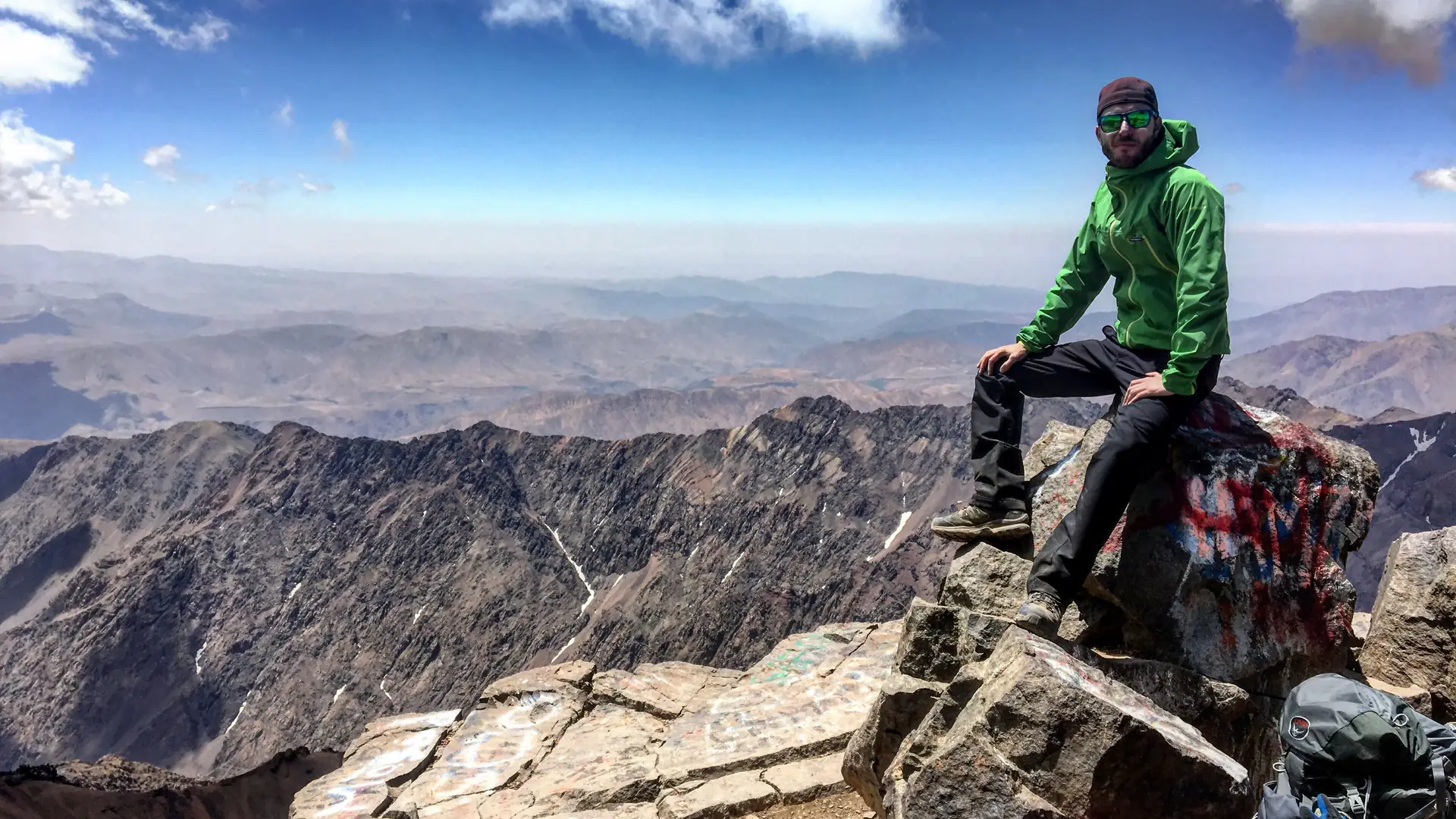
The quick summit trek for hikers short on time: up to the refuge on day one, on top of North Africa at sunrise on day two.
Jbel Toubkal is the highest mountain in North Africa and the Arab world, and the 2‑day trek is the fastest way to stand on top of it. You leave Marrakesh after breakfast, drive 90 minutes into the High Atlas, and by the afternoon you are walking up the Mizane valley towards the Toubkal refuge. The next morning you climb to the 4,167 m summit in the dark, arrive as the sun lights up the range, and walk all the way back down to Imlil the same day.
It is a big effort squeezed into a short time, which is exactly why it is popular with travellers on a city break in Marrakesh or a tight holiday schedule. You gain 1,470 metres on the first day and climb another 960 metres before dawn on the second, then descend almost 2,500 metres. There is no technical climbing in summer and autumn: the route follows a clear mule path to the refuge and a rocky, zigzagging trail up the south cirque to the summit ridge.
What makes the difference on a short trek like this is the team. Your guide sets a steady pace, reads the weather, knows when to rest and when to push, and keeps an eye on how everyone is handling the altitude. A muleteer carries your overnight bag to the refuge, so you walk with a light day pack. Meals are cooked for you, and all you have to do is walk, breathe and enjoy one of the great views of Africa.
This trek suits fit, healthy adults who are used to long days on their feet: people who hike regularly at home, run, cycle or play sport. You do not need climbing skills or mountaineering experience between April and November. You do need the stamina for a 5 to 6 hour walk uphill on day one and an 8 to 10 hour day with an early start on day two.
If you have never been above 3,000 metres, or you would rather enjoy the mountains than race them, consider the 4‑day trek. The extra time lets your body adjust to the altitude, and most people find the summit morning far more comfortable. In winter, from December to March, the 2‑day climb becomes a snow ascent with crampons and an ice axe, so we recommend previous winter walking experience.
A sample itinerary for the 2-Day Mount Toubkal Trek from Marrakech. Your guide adapts it to the weather, the season and the group.
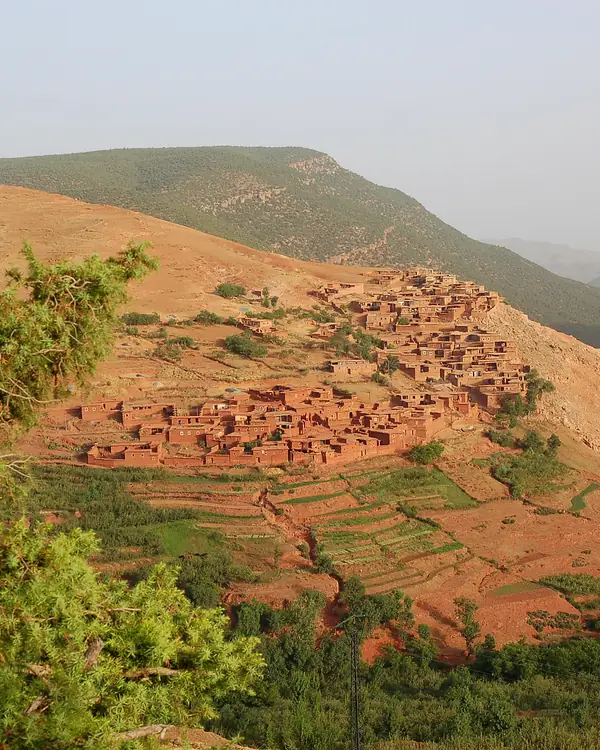
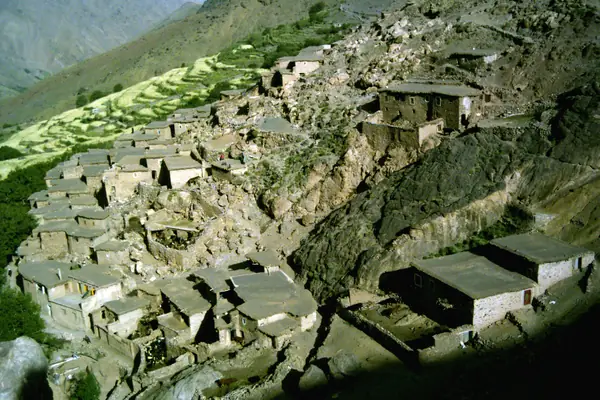
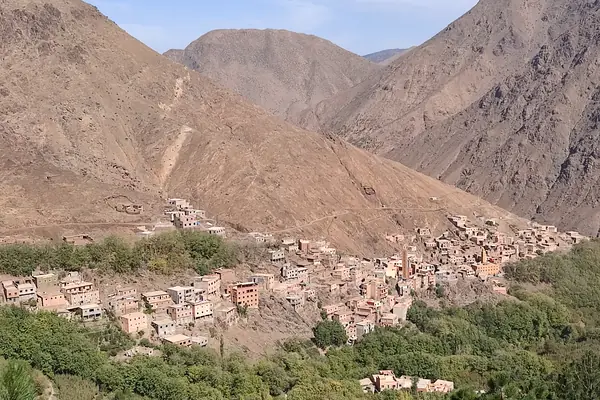
We collect you from your riad or hotel in Marrakesh at around 8:00. The road crosses the Haouz plain, passes the Saturday market town of Asni and climbs through the Moulay Brahim gorge into the Mizane valley, reaching Imlil (1,740 m) after about an hour and a half. Here you meet your guide and muleteer, repack what you need for the night and set off through walnut and apple orchards to the village of Aroumd, the last permanent settlement in the valley. The trail crosses the wide, stony flood plain below the village and climbs steadily to the white shrine of Sidi Chamharouch (2,310 m), a place of pilgrimage for local people, where you stop for lunch and mint tea. Above the shrine the trees disappear and the path zigzags up the valley side towards the Toubkal refuge (about 3,207 m), which you reach in the late afternoon. There is time to rest, drink plenty of water and watch the light fade on the peaks before dinner and an early night.
Breakfast is served at around 4:30, and you leave the refuge by head torch. The trail crosses the stream behind the hut and climbs the boulder fields and scree of the south cirque in long zigzags; your guide keeps the pace slow and steady, because breathing is harder above 3,500 metres. After about two and a half hours you reach Tizi n'Toubkal, the col at roughly 3,940 m, and follow the broad ridge to the metal tripod that marks the summit (4,167 m). On a clear morning the view takes in the whole High Atlas, the plains towards Marrakesh and the Anti-Atlas to the south. After photos and a hot drink you descend the same way to the refuge for a second breakfast, collect your bags and walk back down past Sidi Chamharouch and Aroumd to Imlil, arriving in the mid-afternoon. The drive returns you to Marrakesh in time for dinner in the medina.
The 2‑day trek runs all year, but the experience changes with the seasons. From April to June the days are long, the valleys are green, and snow usually lingers only on the high slopes until May. September and October bring stable weather, clear air and comfortable temperatures, which make them our favourite months for a fast ascent.
July and August are hot in Marrakesh and warm in Imlil, but pleasant at the refuge, and summit mornings are usually cold and clear; afternoon thunderstorms are possible. From December to March Toubkal is covered in snow. The route is still guided, but it becomes a winter climb with crampons and an ice axe, shorter days and temperatures well below freezing on top, so fitness and a careful look at the forecast matter more.
Live forecast
Loading the live forecast…
Forecast data from MET Norway / yr.no, CC BY 4.0. Summit figures are model estimates for 4,167 m. Mountain weather changes fast, so your guide makes the final call.
The only night of this trek is spent at the Toubkal refuge, a stone mountain hut at the head of the Mizane valley. Rooms are shared dormitories with bunk beds, mattresses and blankets; the huts have running water, toilets and showers, though hot water is not guaranteed and the building is cold in the shoulder seasons. Bring a sleeping bag liner (or a sleeping bag in winter), earplugs and a head torch.
Food on the trail is simple, filling Moroccan cooking. Lunch on the first day is usually a fresh salad, bread, cheese, sardines or tuna and fruit, with mint tea. Dinner at the refuge starts with soup, followed by a tagine or couscous and fruit. Breakfast before the summit is bread, jam, honey, eggs and coffee or tea. Tell us about any dietary needs when you book and we will plan around them.
Every departure of the 2-Day Mount Toubkal Trek from Marrakech starts in Imlil, a mountain village at 1,740 m at the head of the Mizane valley, about 65 km south of Marrakesh. We collect you from your riad or hotel in Marrakesh in the morning; the drive takes around an hour and a half, crossing the Haouz plain and climbing through Tahanaout and Asni, where a big Berber market is held every Saturday, before the road follows the river up to Imlil.
If you are flying in, Marrakesh Menara airport is about 20 minutes from the medina, so most people arrive the day before the trek and spend a night in the city. If you are already in the mountains, for example staying in Imlil, Aroumd or Ouirgane, we can meet you there instead. Tell us where you are staying when you book, and we will confirm the pickup time the evening before.
The summit is high enough for altitude to affect almost anyone, and on a 2‑day trek your body has little time to adjust. Mild headaches, poor sleep and breathlessness at the refuge are normal. Drink 3 to 4 litres of water a day, walk slowly, eat even if you are not hungry and tell your guide how you feel. Severe headache, vomiting, dizziness or confusion are warning signs, and the treatment is to go down.
Your guide is licensed, trained in first aid and carries a first-aid kit and a phone; the refuge is the base for mountain rescue in the area. The guide checks conditions every evening and morning and has the final word on summit attempts: if the weather turns or someone is unwell, we turn around. Travel insurance that covers trekking up to 4,200 m and emergency evacuation is essential.
Tipping is customary in the mountains and makes a real difference to the guides, muleteers and cooks who look after you. As a rough guide, many trekkers give around 10% of the trek price, shared between the team at the end of the trip. It is never compulsory; give what feels right for the service you received.
Bring Moroccan dirhams in small notes for tips, drinks and snacks bought on the way, and souvenirs in the villages. Withdraw cash in Marrakesh before the trek: card payments are rare in the mountains and you should not count on finding a cash machine.
Tick items as you pack. Your list stays saved in this browser.
Read our notes on fitness, seasons and altitude, or the questions trekkers ask most.
October 2026
A very good experience. A superb, very well organised outing with our guide Youssef! Very good communication with Mohamed! Toubkal in one day! Mission accomplished! I recommend it
Translated from French
September 2026
A superb experience for a first 4,000 m peak, full of traditions and landscapes. Our guide Yassine was great and looked after us all the way up! I recommend it!
Translated from French
August 2026
Perfect! A guide who adapted perfectly to our pace. Nothing to fault 👌🏼
Translated from French
April 2026
Climbing Toubkal with Hassan as my guide was a wonderful experience. He is incredibly strong and experienced, and always made me feel confident, even on the most demanding sections… Read the full review on Google
Translated from French
2025
A big thank you to Said for our day in Toubkal National Park. We wanted to climb Toubkal from Imlil and back in a single day. Challenge accomplished thanks to Said, who organised our departure and all the equipment we needed very quickly. Thank you for a unique experience!
Translated from French
2025
A great experience! We climbed Mount Toubkal as a group of five. The organisation and communication were perfect. Rachid, our brilliant French-speaking guide, took us safely all the way to the summit. Everything was perfect
Translated from French
Can't find your question? Ask us on WhatsApp. We usually reply within a few hours.
A fit beginner can, in summer and autumn, because the route is a walk rather than a climb. The challenge is the length of the days and the altitude. If you have no hiking experience at all, the 4‑day trek gives you a better chance of enjoying the summit.
Most groups take 3 to 4 hours from the refuge to the summit, 2 to 3 hours back to the refuge, and another 3 to 4 hours down to Imlil, so plan on 8 to 10 hours including breaks.
Usually between 4:30 and 5:30 in the morning, depending on the season, so that you reach the top around sunrise and descend before the afternoon heat or clouds.
No. A mule carries your overnight bag to the refuge and back. You only carry a day pack with water, snacks, warm layers and your camera.
Yes, from December to March with crampons and an ice axe, which we can supply. Snow makes the climb harder and slower, so we recommend some winter walking experience and a flexible attitude to the weather.
Your guide will turn back with you or arrange for you to wait safely at the refuge while the rest of the group continues. Your safety always comes before the summit.
Yes. Every trek can be booked as a private trip for your own group, with the same guide and team throughout.
Tell us when you'd like to go and who's coming. We reply with availability and a clear quote, usually within a day.
from €170 per person
Price estimate
An estimate only. We confirm the exact price with your quote.
See how the 2-Day Mount Toubkal Trek from Marrakech compares with our other treks, or let the quiz below suggest one.
Sort by:
| 2-Day Mount Toubkal Trek from Marrakech | 2 | Challenging | 4,167 m | Yes | €170 |
|---|---|---|---|---|---|
| 4-Day Mount Toubkal Trek | 4 | Moderate to challenging | 4,167 m | Yes | €250 |
| 6-Day Mount Toubkal Trek | 6 | Challenging | 4,167 m | Yes | €350 |
| 7-Day Mount Toubkal Trek from Marrakech | 7 | Challenging | 4,167 m | Yes | €450 |
| Mount Toubkal via Azzaden Valley | 3 | Challenging | 4,167 m | Yes | €195 |
| 3-Day Berber Villages & 3 Valleys Trek | 3 | Moderate | 2,489 m | No | €195 |
| 3-Day High Atlas Mountains Hiking Tour from Marrakech | 3 | Moderate | 3,172 m | No | €195 |
| 6-Day Hike in the Atlas Mountains | 6 | Moderate to challenging | 3,172 m | No | €350 |
| Imlil Village Day Trip from Marrakesh | 1 | Easy | 1,960 m | No | On request |
| 10-Day Morocco Tour: Toubkal, Kasbahs and Sahara | 10 | Moderate | 4,167 m | Yes | On request |
No trek matches these filters. Try fewer filters, or ask us for a custom trip.